Why We Choose to Stay Inside the Park
We were sitting outside our bungalow in Kruger National Park.
The safari day had ended hours earlier. We were playing cards with two friends who had joined us on the trip and, as often happens when we’re in Africa, every now and then we would shine a flashlight into the darkness to see if anything was moving beyond the camp fence.
That evening, two small glowing eyes appeared.
At first, we thought it was one of the many antelopes that occasionally wander close to the camps.
Then we looked more carefully.
It was an African Wild Cat.
One of the most difficult animals to spot on safari.
We spent several minutes watching it move through the darkness, just a few metres away from us.
The safari had been over for hours.
And yet, we were still experiencing one of the most exciting moments of the day.
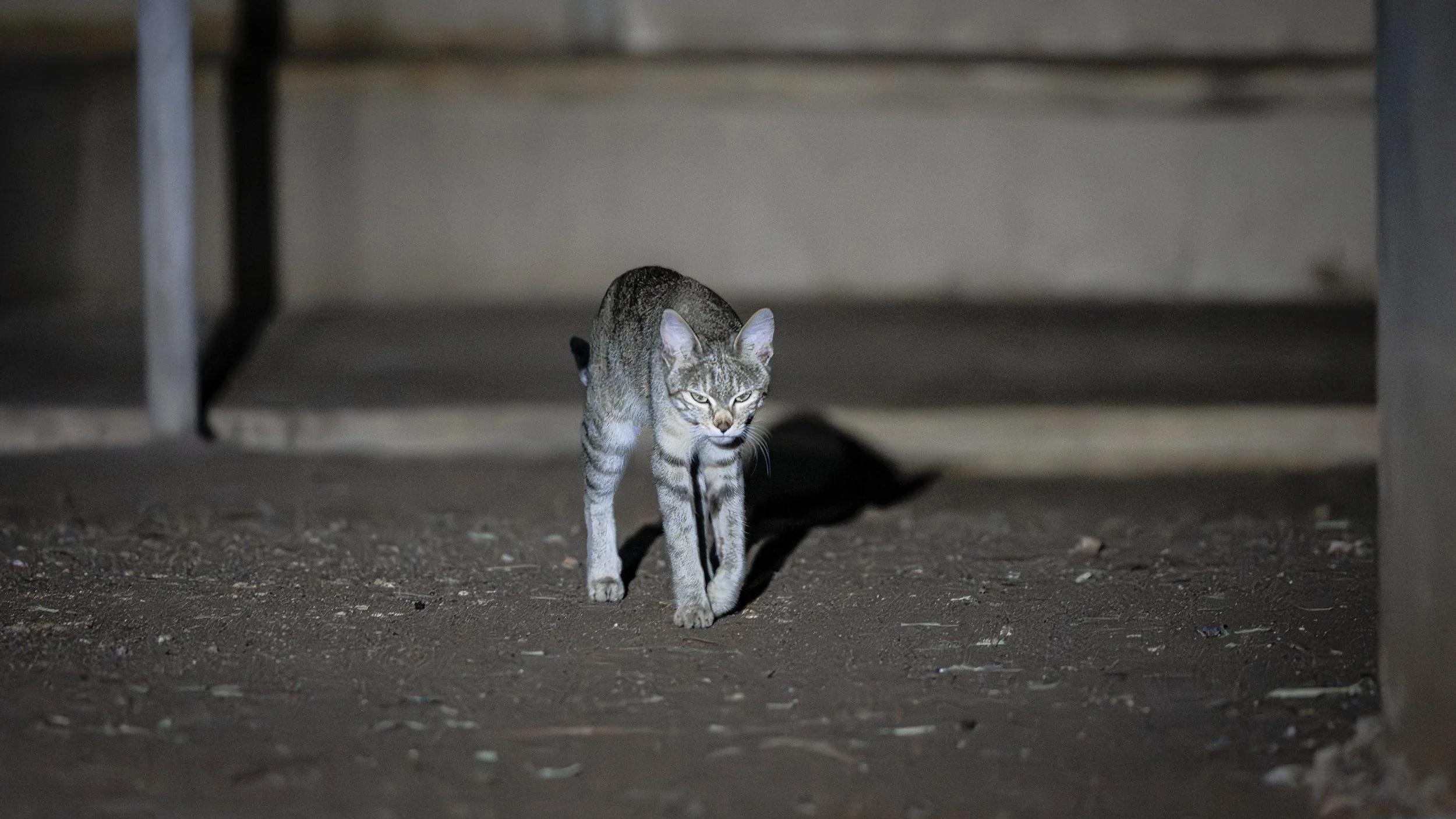
The safari was over. The sightings were not.
The safari had been over for hours.
Yet we were still experiencing one of the most exciting moments of the day.
Perhaps that is the main reason why, whenever we can, we choose to stay inside national parks and the private reserves of the Greater Kruger.
Many travellers focus on wildlife sightings during game drives.
We have learned that some of Africa’s most authentic moments are often found between one safari and the next.
There is a practical side to it, of course.
Staying inside Kruger National Park means avoiding the daily park entry procedures, access formalities and potential queues at the gates.
We are not talking about hours, but often about those thirty minutes that can make the difference between reaching a promising area at sunrise or arriving when much of the wildlife activity has already faded.
In some seasons, it also means being able to leave camp earlier than visitors staying outside the park.
But that is not the main reason why we keep choosing this way of travelling.
The real difference lies in what happens once the engine is switched off.
That is when the safari gives way to the experience.
That is when you begin to listen.
Sometimes it is the distant roar of lions as you are trying to fall asleep.
Other times, it is the sound of hyenas wandering near the camp fences.
One evening, still in Kruger, after spotting the African Wild Cat, we almost turned it into a game and started checking the darkness every night to see what might be moving around us.
The following night, we found a python, nearly two and a half metres long, silently gliding alongside the fence.
A few evenings later, it was a genet.
In other camps, we have watched hippos moving near bridges after sunset, or curious hyenas passing through the darkness nearby.
These are the encounters that rarely end up in our best photographs.
Yet they are often the ones we remember the most.
The same is true for the private reserves of the Greater Kruger.
During one of our stays, the lodge staff informed us that a leopard had just arrived at the waterhole.
Within seconds, everyone was running out of their rooms.
Chanty even rushed out of the shower wrapped in a towel, determined not to miss the sighting.
By the time we arrived, the leopard had already disappeared.
We thought that was the end of it.
Then, during dinner, it emerged from the darkness once again.
Just for a few seconds.
Long enough to turn an ordinary evening into a memory we still talk about today.
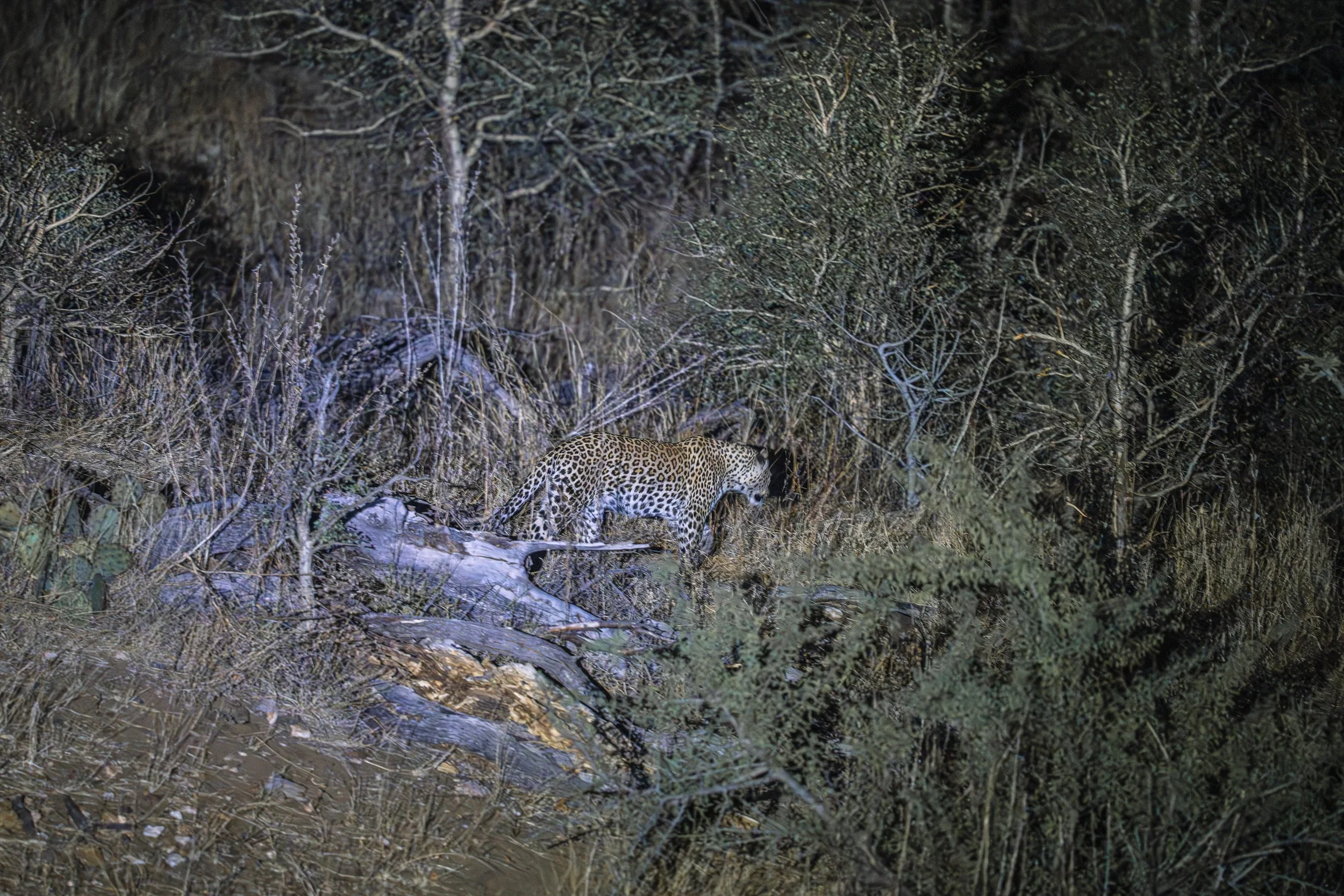
Just a few seconds in the darkness. Long enough to never forget it.
Years earlier, during a camping trip in the Namibian desert, a jackal approached our campsite shortly after dinner.
The following morning, we found oryx tracks all around our tent.
That night, the safari was theoretically over.
But Africa was not.
And perhaps that is the biggest difference of all.
When you stay inside a national park or a private reserve, you are not just experiencing the safari.
You are experiencing the place itself.
You listen to its sounds.
You gaze at the stars far from any light pollution.
You embrace the unexpected.
You leave room for the moments that no one can plan.
That is also why, in the journeys we organise with Salves Travel, we always try toprioritise stays inside national parks or private reserves surrounded by nature.
Not because they guarantee more sightings.
But because they offer something even rarer.
The chance to create memories that begin when the safari is supposed to be over.
Chanty & Marco
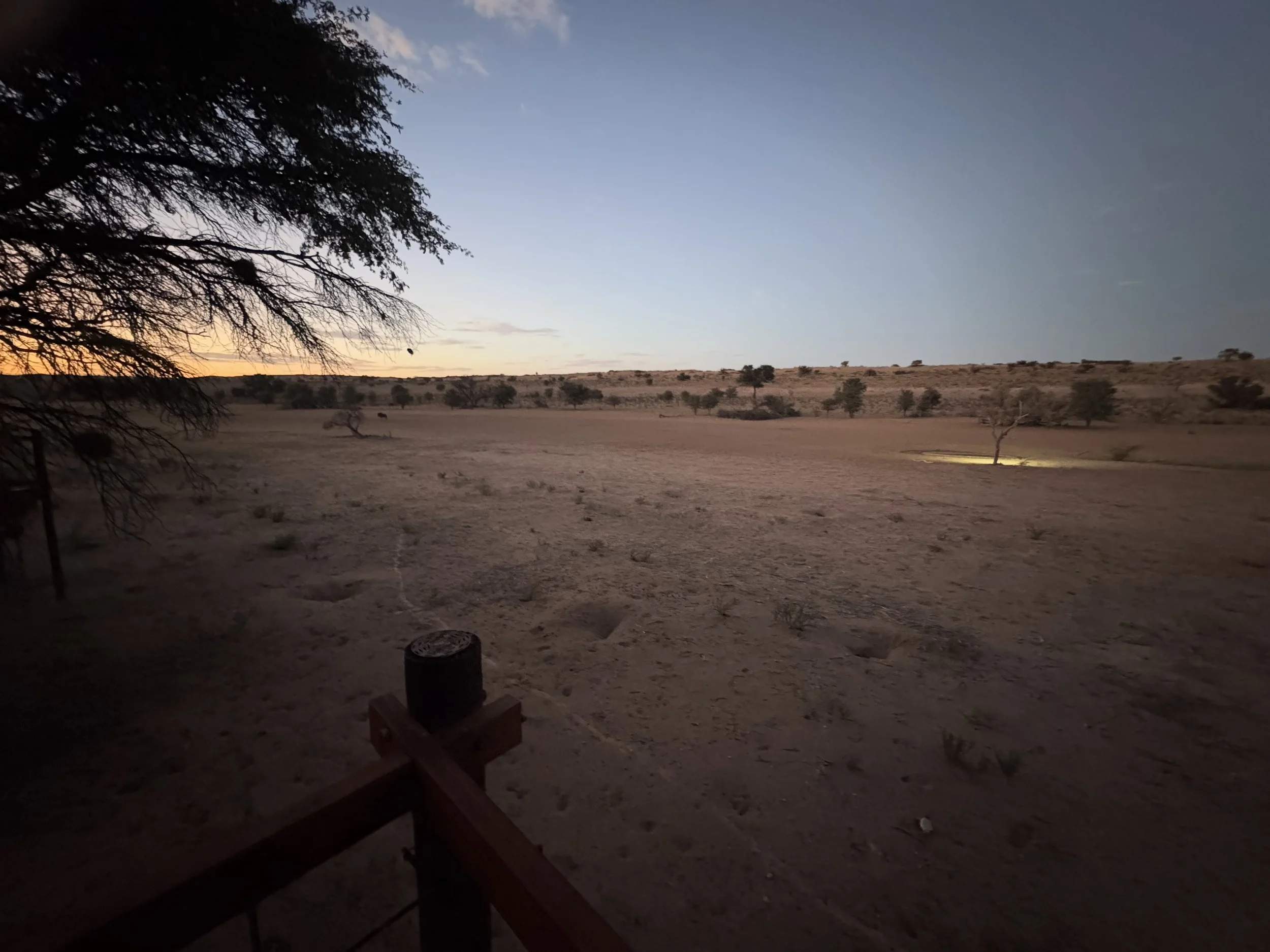
The view from our room. The safari begins again from here.