A Safari Is Not a Checklist
There are encounters you cannot search for. You can only stay long enough to let them happen.
Before leaving for a safari in Africa, almost everyone has a list in mind.
Lion.
Elephant.
Leopard.
Rhino.
Buffalo.
The famous Big Five.
And that is normal. Every time we leave at sunrise in Kruger National Park or in other African parks, we also hope to meet certain animals. Especially predators. It would be dishonest to pretend otherwise.
But journey after journey, road after road, we have learned that a safari is not a list to complete. It is not a collection of sightings. It is not just about being able to say: “I saw it.”
A safari is a way of being inside nature.
It means setting out with a wish, but leaving space for what happens. It means understanding that, very often, the difference between a simple sighting and a memory that stays with you is the time you decide to give it.
Because in Africa, not everything reveals itself immediately. Sometimes the story arrives later.
When a Simple Scene Changes Shape
During one of our recent safari trips in South Africa, in the middle of the afternoon, we were driving from one camp to another. It was a hot day, the kind of day when even the landscape seems to breathe more slowly.
At one point, we saw two hyenas inside a waterhole. They were lying in the water, quiet, almost motionless.
A beautiful scene, of course. But one that could easily be underestimated.
We stayed.
After a few minutes, two warthogs arrived. One was larger, probably the male, and the other was smaller. At first, they kept their distance. They were thirsty, but they were also looking for mud: during the hotter periods, many animals use waterholes to cool down and protect their skin from the sun, insects and heat.
The best spot, however, was exactly where the hyenas were.
Slowly, the larger warthog began to move closer. One step at a time. Without rushing. Until it was only a few metres away from them.
Then it entered the mud and began to roll.
In front of us were two hyenas, opportunistic predators, and an animal that, in another situation, could have been prey. And yet, in that moment, there was no hunt. No escape. No panic.
There was a silent, temporary, almost comical truce.
It looked like a scene from The Lion King, but without fiction. Just mud, heat, wild animals, and that strange harmony that sometimes appears where you least expect it.
If we had left straight away, we would have seen two hyenas in a waterhole.
By staying, we watched a small story unfold in front of us.
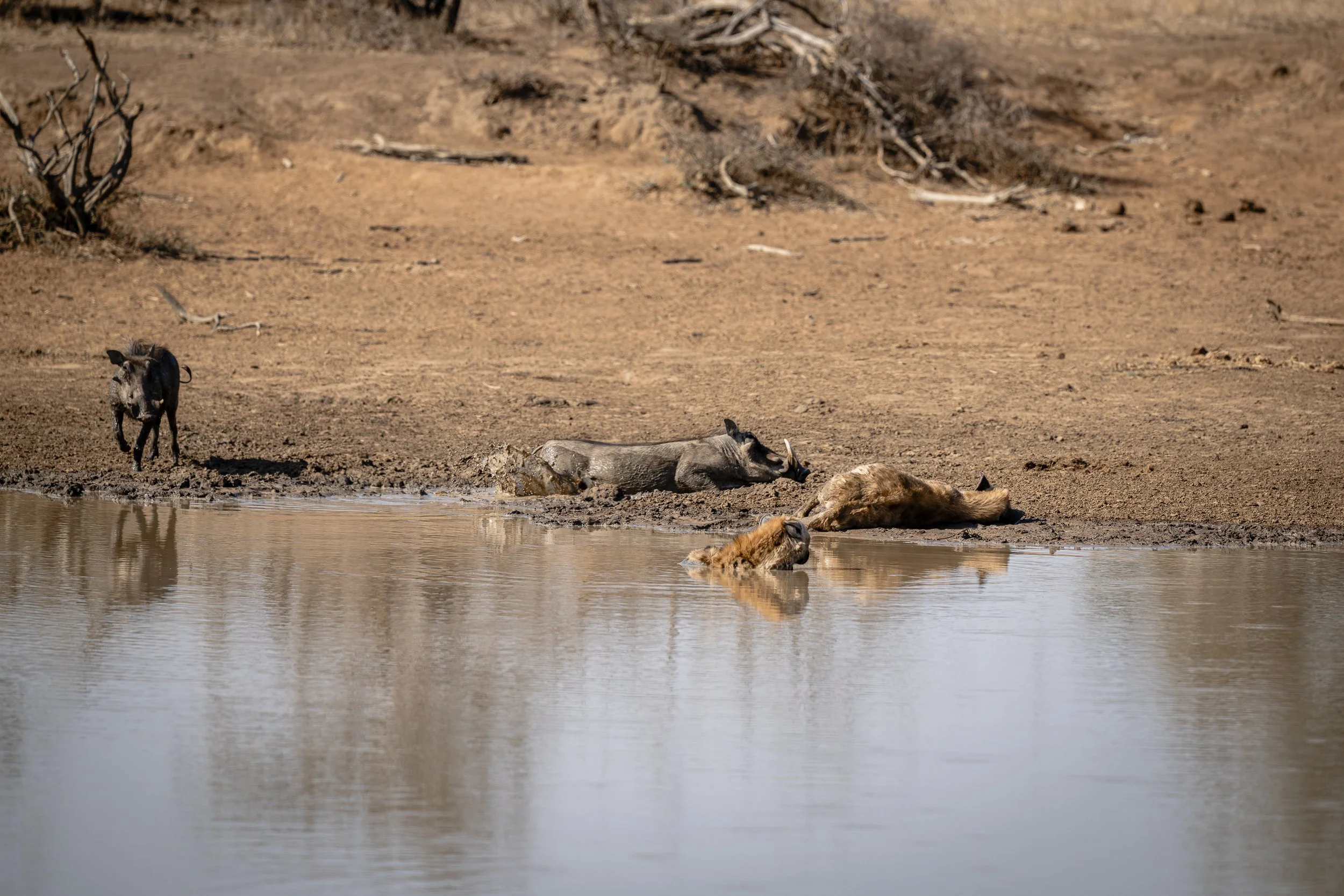
Two hyenas, two warthogs, no rush.
Waiting Is Not Wasted Time
On a photographic safari, you often see something in the distance and have to choose: stay or move on.
Once, we spotted a cheetah about three hundred metres from the road. It was far away. Too far for a truly strong photograph. Too far to feel part of the scene.
For many people, it would have been a quick sighting.
“Cheetah seen. Let’s go.”
We stayed.
For about an hour, we watched it from a distance. Without knowing whether anything would happen. Without any guarantee. Only with that hard-to-explain feeling that, on safari, you slowly learn to recognise: maybe this is not over yet.
And then, when we were almost alone, the cheetah began to move closer.
Slowly at first. Then closer and closer.
At one point, it crossed the road in front of us. Not once, but twice. We had time to observe it, photograph it and follow its movements, without confusion and without dozens of cars around us.
Then, for one brief moment, it accelerated. Not a long run. Not a hunt. Just a short, sudden, almost unreal burst of speed. From one side of the road to the other in a second.
A brief gesture, but enough to remind you that you are looking at one of the most extraordinary animals on the planet.
If we had driven away immediately, we could have said we had seen a cheetah.
By staying, we experienced an encounter.
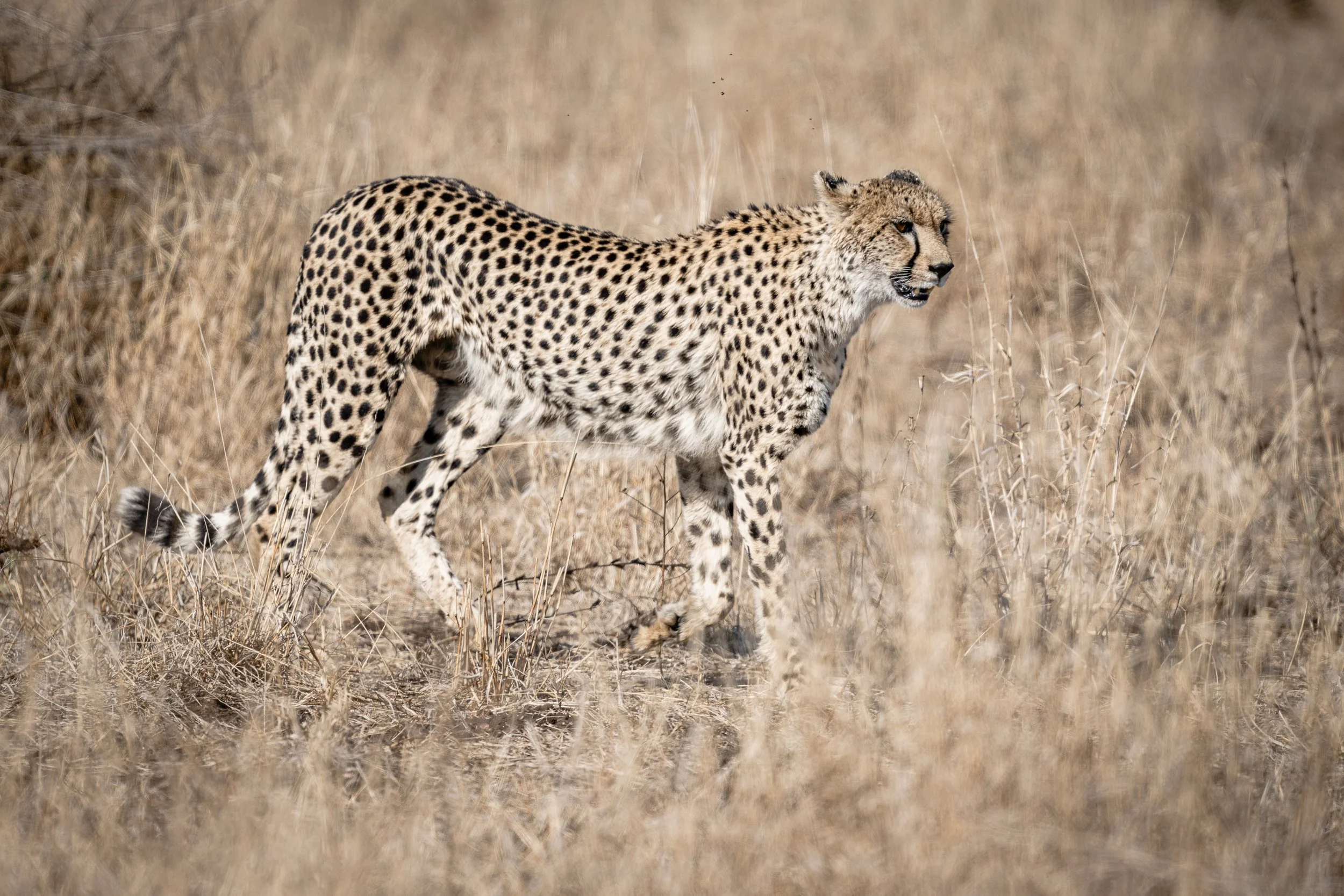
An hour of waiting, then two seconds that made it all worth it.
When They Are the Ones Who Come Closer
There is another thing you learn with time: not all encounters begin in the same way.
When you are the one arriving near an animal, especially herbivores such as zebras, antelopes or elephants, the scene is often already shaped by your presence. The animal sees you arrive, evaluates you, and decides how much space to give you.
If you get too close, or move too quickly, the animal reacts. It may not run away, but it changes posture. It closes off. It tolerates you more than it allows you in.
But when you are already still, and they are the ones coming towards you, everything changes. You are not entering their space. They are choosing to shorten the distance.
It happens with elephants, when you see them in the distance and stop before they arrive. It happens with zebras, when a small group approaches slowly, somewhere between curiosity and caution.
And that is when, sometimes, you receive something more.
A direct look.
A step towards you.
An elephant crossing the road without changing its intention.
For a wildlife photographer, these are precious moments. But even before the photograph, they are moments of trust. Not romantic, invented trust. A wild, minimal, temporary kind of trust. Just enough for the animal to continue being itself in front of you.
And that is one of the most beautiful feelings on safari: not taking the scene, but receiving it.
Nature Does Not Follow Our Schedule
One of the scenes that stayed with us the most happened just when, in theory, the safari was almost over.
We had to leave Kruger and drive to the airport. Along the road, we found a few lionesses resting near the bush. They were calm, lying close to the edge of the road. There was also a cub with them.
At first, it looked like a quiet scene. Lionesses resting. Beautiful, of course, but apparently without much movement.
Then one of the females crossed the road with a different attitude. Low. Focused. Silent. She was staring at a precise point, about a hundred metres away.
We went to check.
On the other side, there were two warthogs.
So we returned to the lionesses. We still had time before the airport, so we decided to wait.
And the tension took shape.
One of the lionesses made a wide loop. She moved behind the warthogs, pushed them into motion, and drove them towards the other females, who had stayed in position.
In a few seconds, the scene changed completely. What had looked like a calm morning became a hunting strategy. Coordinated, precise, instinctive.
It was a powerful scene. Raw. Emotional, but not easy.
When we drove on towards the park exit, we stayed silent for a long time. It was not just adrenaline. It was something deeper, and more uncomfortable.
We had just seen nature without filters.
One moment there is life. A few minutes later, there is not.
On safari, not everything is sweet, beautiful or simple. Nature does not soften its rules for us. And when you see it that closely, it stays with you.
This is also part of safari: not only the emotion of the sighting, but the respect for what you have just witnessed.
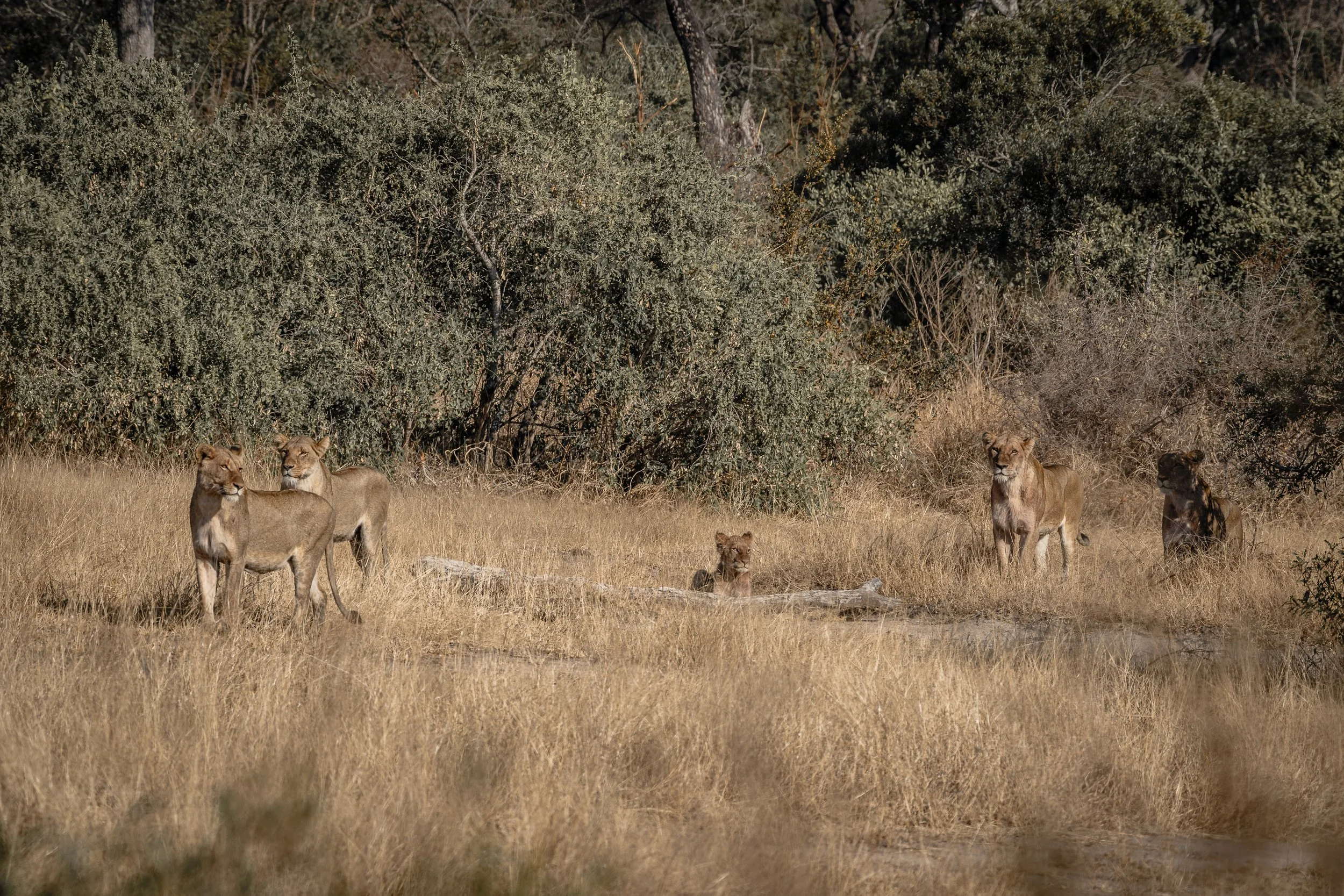
Moments earlier. Everything seemed calm.
Not Only Predators
It is easy to think that a safari in Africa is mainly about big predators. Lions. Leopards. Cheetahs. Hyenas.
And yes, meeting them is always special. Every time.
But if you only look for them, you risk crossing Africa while seeing only part of it. Sometimes the most beautiful scene is a giraffe walking towards you with a calm elegance that seems to belong to another time.
And then there are the details.
Oxpeckers moving up and down the body of a giraffe, searching for parasites in its fur, while the giraffe lets them do it as if it were part of an ancient ritual.
Or a dung beetle pushing a ball larger than itself, perhaps made from elephant dung. You see it moving forward with absurd determination, then a small slope appears and it rolls away together with its sphere.
It is a small scene. Almost funny. But that, too, is safari.
Safari also means learning to give importance to what you would normally pass by.
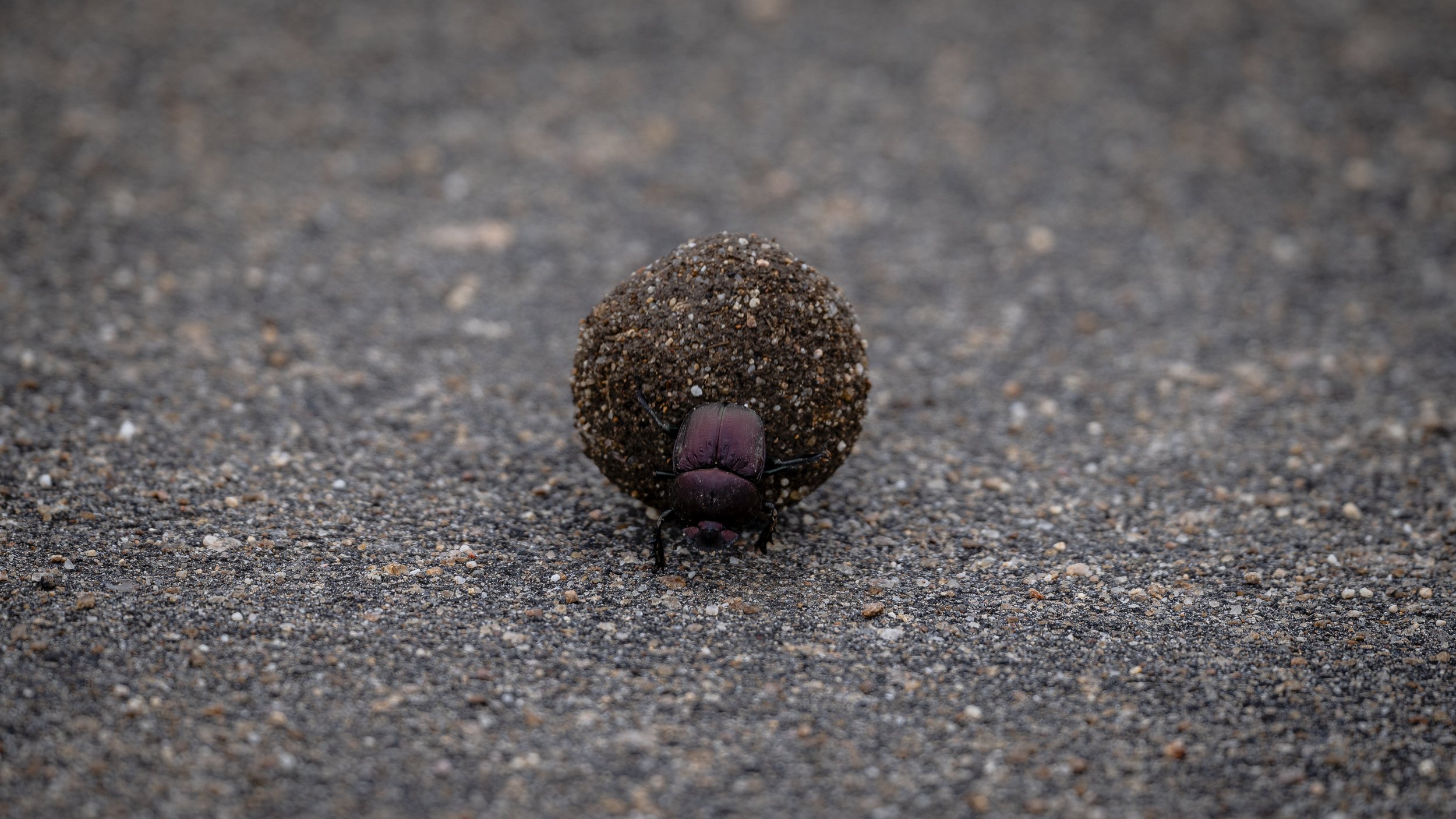
This is safari too.
Our Way of Experiencing Safari
This is why, when we think about Salves Travel journeys, we never imagine a safari as a race from one sighting report to another.
Of course, the goal is to see animals. As many as possible. Possibly in beautiful, emotional and photographic situations. But we do not want to reduce the journey to a list of names.
For us, a safari needs space. Space to wait. Space to observe. Space to understand whether a scene may evolve.
In our journeys, we try to create exactly this: small groups, more attentive rhythms, time inside the park, attention to light, photography and animal behaviour.
Because a good safari journey is not only about returning with a full list.
It is about returning with images, silences and scenes that continue to resurface long after the journey is over.
Stories Cannot Be Checked Off
In the end, seeing a lion, a leopard or a cheetah is always exciting. It would be impossible to say otherwise.
But safari begins to become something different when you stop measuring it only by what you have seen, and start remembering it for what you have lived.
The dust on the road.
The silence before sunrise.
A waterhole in the middle of the afternoon.
A warthog approaching two hyenas.
A distant cheetah that, after an hour, decides to cross in front of you.
A zebra that comes closer because you did not invade its space.
A lioness watching something you have not yet understood.
Often, you set out looking for animals.
Then, if you are patient enough, the stories find you.